
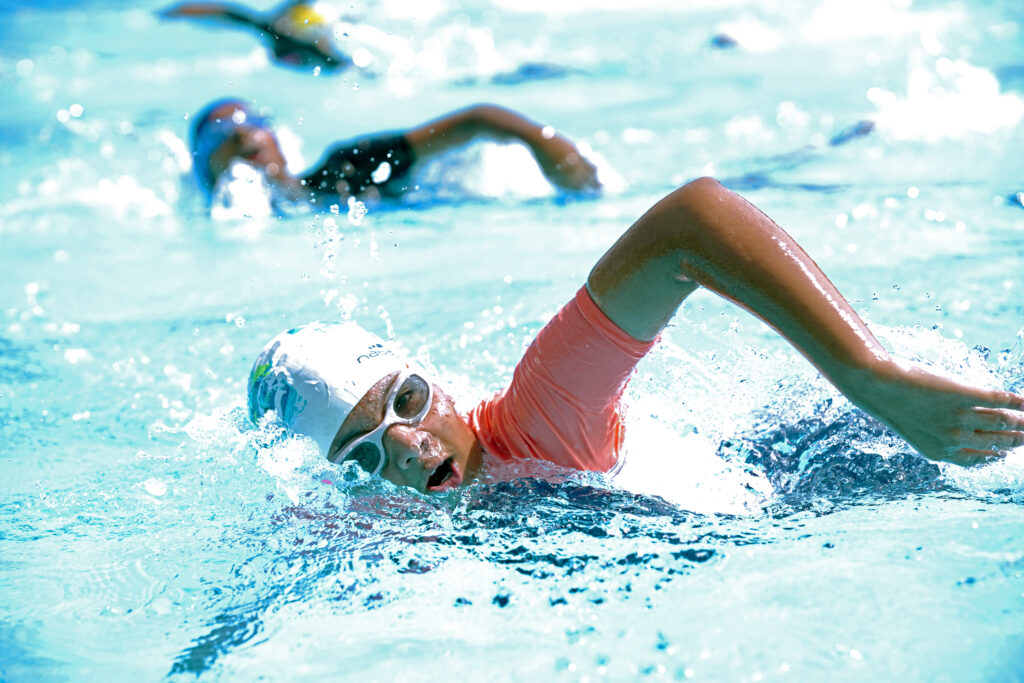
Swimming is more than cool laps and poolside laughter—although there is definitely a place for both. It is an enjoyable form of physical activity that can contribute to a child’s overall wellbeing alongside physical development.
The wellbeing points below describe general associations with physical activity, not medical treatment or a guarantee for any individual child. The World Health Organization reports benefits for children’s cognitive outcomes and mental health, while the CDC’s school-age guidance summarises evidence on brain health and wellbeing.
1. Time to reset
Regular movement can support mental wellbeing. Some children also find the rhythm of swimming and the water environment calming and enjoyable.
2. A confidence booster
Mastering a new skill, including the first brave moment of putting your head underwater, creates a strong sense of accomplishment. Each victory, big or small, builds self-belief.
3. Focus and coordination
Swimming is a full-body activity that involves coordination, attention and controlled breathing. More broadly, regular physical activity is associated with brain-health benefits for school-aged children.
4. A social splash
Lessons and teams help children connect with peers, build friendships and develop teamwork. The pool becomes a social space that encourages community and belonging.
5. A healthy routine
Active time can be one part of a balanced routine that also includes adequate rest, nutrition and age-appropriate sleep. Families should seek professional guidance for persistent sleep or mental-health concerns.
6. Making a splash at Sujatha School
Our swimming pool, modern equipment and qualified coaches create an encouraging environment for children of different ages and abilities. The programme goes beyond strokes and laps to foster a lasting love for water and wellbeing.
Curious to learn more?
Contact the school or plan a visit to see how students learn, play and grow at Sujatha.
Talk to us